












"I'd love to try ballet, but I can't even touch my toes."
If that sounds like you, you're in good company. Flexibility is one of the most common reasons adults hesitate to book a first ballet class. Here's the reassuring answer, along with what's actually worth knowing before you start.
The short answer: no
You don't need to be flexible to start ballet. Beginner classes are designed for people who are just starting out. For example, at the University of North Carolina School of the Arts, the adult Beginner I class is for people who have never taken ballet, have little dance background, or are returning after years away, and its description states that "Prior Experience is not required."
San Francisco Ballet School's adult program says something similar: it believes ballet is for everyone, including adults with little or no dance experience.
UNCSA's description also points to what happens next. It describes adult ballet as a way to develop strength, flexibility, and balance, with gradual progression and each class building on earlier skills. In other words, flexibility is something ballet helps you build, not something you need to bring.
What "flexible" means in ballet
When people talk about ballet flexibility, they usually mean things like how high the leg lifts or how far the hips rotate outward (called turnout). It helps to know a few things:
- Flexibility isn't the whole story. A Dance Spirit feature on turnout, which quotes a physical therapist who works with ballet dancers and several teachers, describes turnout as rotation from the hip down to the feet, and explains it takes flexibility, strength, and placement. It names the lower abdominals, lower back, glutes, and thighs as key muscles.
- Almost nobody starts with "perfect" turnout. The article notes that hardly anyone is born with 180 degrees of rotation.
- Beginner classes don't expect it. You're there to learn the basics at your own level.
Note that the Dance Spirit article was published in 2010, so treat it as background rather than the latest research.
One thing to avoid: forcing it
It can be tempting to push your feet into a wide turned-out position to look the part. The same Dance Spirit feature warns against this:
- Turning out past your natural alignment in a plié can strain the hips, knees, and ankles. The signs it lists include tucked hips, feet rolling inward, or a swayed back.
- Walking around with turned-out feet all day won't improve your rotation and can cause ankle, knee, and hip pain.
- Forcing turnout without the right muscle support is described as a common early mistake.
The takeaway: work within your own range. If something feels painful rather than challenging, back off and tell your teacher.
How to choose a beginner-friendly class
- Look for a true beginner level. Class names vary. At UNCSA, for example, Beginner I requires no experience, while Beginner II does ("Prior Experience is required"). When you're signing up, read the level description or ask whether the class is for people who have never taken ballet.
- Tell the teacher about tight areas or past injuries. Teachers can't adjust what they don't know about.
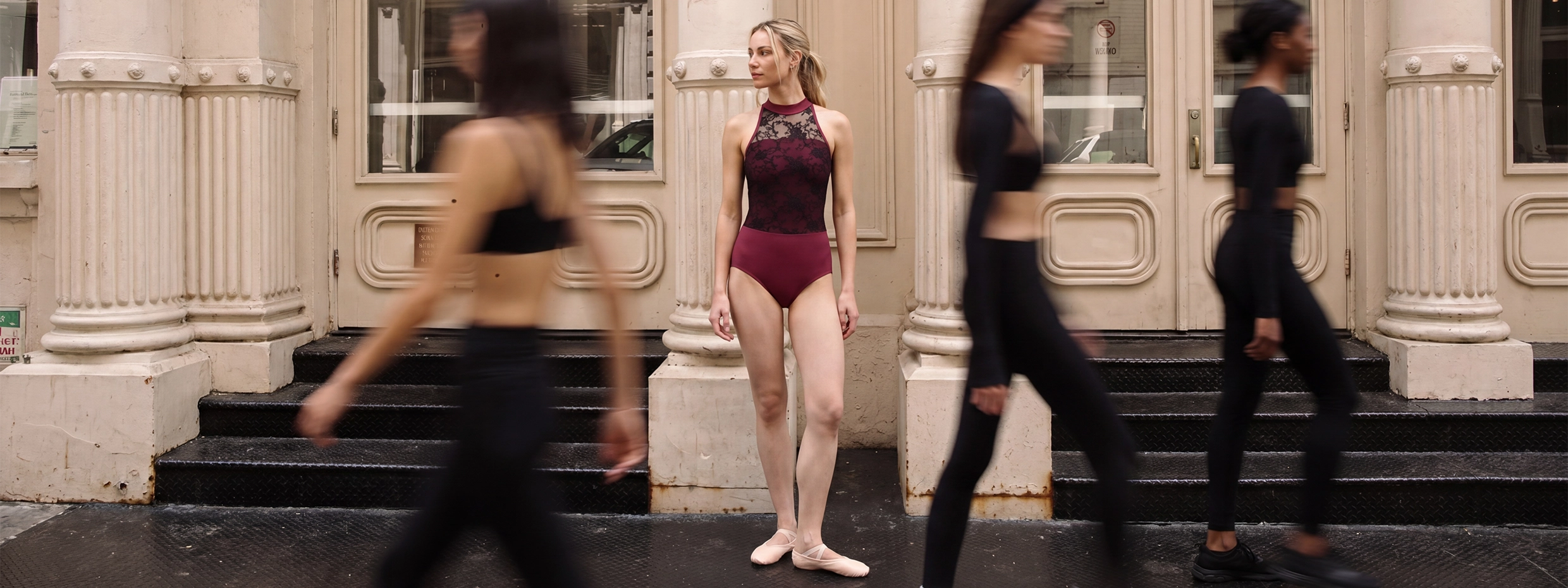
- Come as you are. UNCSA's adult class guidance says to wear a leotard and tights, or fitted athletic wear such as leggings, with soft ballet shoes strongly recommended. See our guide to what to wear to your first adult ballet class.
Common worries, answered
| "I'm worried that..." | What to know |
|---|---|
| I can't touch my toes | Beginner classes don't require it. Flexibility is one of the things classes help develop over time. |
| My turnout isn't good | Few people have extreme turnout, and it relies on strength as well as flexibility. Don't force it. Work within your range. |
| I'm too stiff to keep up | You'll work at your own level. Let your teacher know where you feel tight. |
| Everyone else will be better | Choose a class labeled for beginners, where everyone is starting out. |
Should you stretch before your first class?
You don't have to. If you'd like to loosen up, Dance Magazine's guidance for taking class is to warm up before class and save stretching for afterward. If you want to add stretching between classes, ask your teacher or a qualified professional for gentle options that suit your body, and don't push into pain.
The bottom line
Flexibility is something you can build with ballet, not something you must have first. The best way to find out is to try a beginner class. If you're not sure what to expect, brush up on a few ballet terms before you go.
Ready for your first class? Explore the SLÉMON Leotard and Ballet Shoes collections, or visit our FAQs.
