












You don't need a studio to start learning ballet. Many dancers, from beginners to professionals, have taken class in living rooms and kitchens. With a little preparation, you can try your first plié at home, at your own pace, before you ever step into a studio.
This guide covers how to set up a safe space, what you'll need, what a simple first session looks like, and where to find teacher-led classes. It also covers what home practice can't do, so you know when to look for an in-person class.
Start with the space
You don't need a big room. English National Ballet's home-studio tips suggest you "just need to clear an area in advance," ideally a spot you can return to regularly, with furniture you can move aside and bring back. A room with good light and ventilation helps.
Move anything breakable out of the way. If you have a mirror, keep it safely out of your way so it doesn't become a hazard.
Think about your floor
This is the part where experts don't fully agree, and the right answer depends on what you're doing and what's on your feet. Here's what a few well-known sources say:
| Source | What it says |
|---|---|
| English National Ballet | Polished wood works well. Tile suits barre work but lacks shock absorption, so it's poor for jumps. Carpet handles barre and some jumps but is weaker for turns. A sheet of MDF or plywood over the floor, or a yoga mat, can help. Avoid slippery floors. |
| Tiler Peck (New York City Ballet principal, via Pointe Magazine) | Leather-soled shoes work for her on tile, while canvas shoes are safer on carpet for barre and turns. For jumps indoors, put a yoga mat over hardwood for cushioning. |
| Dance Magazine | Even barre work on a home carpet or hardwood floor doesn't match studio conditions, and it advises against carpet. |
One reason for the caution is impact. Floor-safety experts quoted by Dance Magazine at the IADMS conference note that repeatedly landing on a hard, unyielding floor can lead to stress-related injury.
Our suggestion for beginners: keep your first sessions simple and stay at the barre. Skip jumps and fast turns until you're working with a teacher. Choose a surface that isn't slippery and feels comfortable on your joints.
Find something to use as a barre
You don't need a professional barre. English National Ballet suggests sturdy household objects such as a chair back, a window sill, or a kitchen counter, and a sturdy portable barre if you can get one. Two things to check:
- It must be stable. Whatever you use shouldn't tip, slide, or wobble when you rest your hand on it. If you use a chair, a heavy one is safer.
- The height should suit you. Tiler Peck's advice is to pick a height where your shoulder isn't hiked up: "The most important thing is that you don't have your shoulder up." If a counter is too high, a chair may work better.
The barre is there for balance, not to hold your weight, so a light touch is enough.
What to wear
- Fitted clothing lets you see your own lines. Tie your hair up so it stays out of your face.
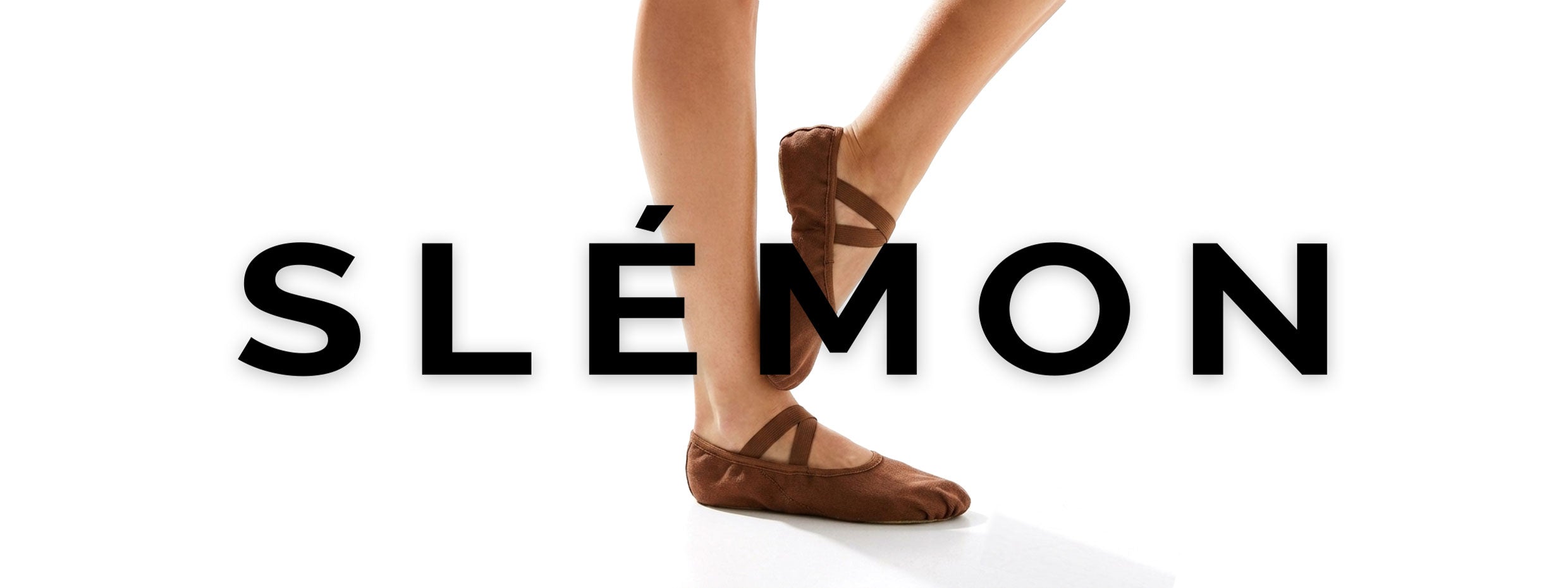
- Footwear: English National Ballet says, "From ballet shoes to socks or barefoot, find what works best for you." The best choice depends on your floor, so check that you don't slip. Browse ballet shoes →
Not sure what to put on? Our guide to what to wear to your first adult ballet class covers it.
What a simple home session looks like
Beginner classes from professional companies follow a familiar order, and they're a good model to copy. English National Ballet's beginner series, for example, includes classes that begin with warm-up exercises, then move to pliés and tendus. One of its classes covers demi plié, battement tendu, and the five positions of the feet and arms. Another covers barre and center work.
A sensible home session follows the same pattern:
- Warm up. Dance Magazine recommends warming up before class and saving stretching for afterward.
- Barre basics. Pliés and tendus are the usual starting point. Not sure what those words mean? See our ballet terms for beginners guide.
- A little center work. Slow, simple movements away from the barre.
- Cool down and stretch.
The classes in English National Ballet's beginner series run from roughly 25 to 50 minutes, with most in the 30-minute range, so there's no need for long sessions. Starting short is fine.
Follow a teacher-led class
Rather than inventing your own routine, follow a class designed for beginners. Several ballet companies have offered free or low-cost online classes:
- English National Ballet has a beginner ballet series on its watch site. The page says its Rediscovering Ballet classes "can be done in a small space."
- Dutch National Ballet offers online ballet classes, including barre classes you can do at home with a chair, table, or kitchen counter as a barre.
Availability changes, so check each company's site for what's currently offered.
Tips for sticking with it
- Pick a regular time. Tiler Peck suggests setting a fixed class time so the people you live with know when you need the space.
- Put your phone in another room and clear clutter, as Dance Magazine suggests, so you can focus.
- Go slowly. If something hurts, stop.
What home practice can't do
At home, there's nobody to correct you. A teacher can see your alignment, adjust how you're standing, and spot habits that are easy to build without realizing. Dance Magazine also points out that even a good home setup doesn't match studio conditions.
That's why many beginners use home practice to get comfortable, then book a first in-person class when they're ready. When you do, our guide to what to wear to your first adult ballet class is a good place to start.
Ready for your first pair of ballet shoes? Explore the SLÉMON Ballet Shoes collection, or visit our FAQs.


